


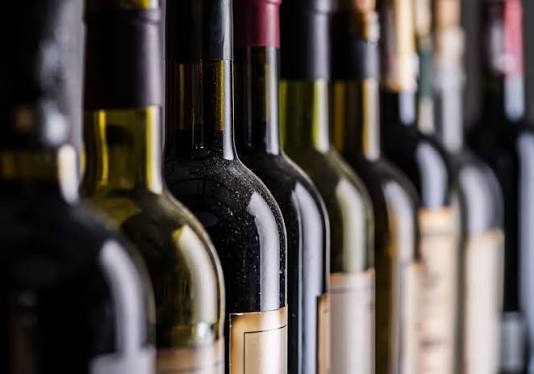
Holiday Wine Box 2026
$235.00
With a retail value of $250, this is the easiest decision you’ll make all season: a ready-made box of exceptional bottles at a great value for MWL members.
$210 for MWL Members (must be logged in to membership account to receive discount)
$235 for non-Members
– PRE-ORDER now. You can order your wine box now through November 17th.
– PICK UP later. Your wine box will be available for pick up from MWL between November 19th-30th.
SEE BELOW FOR THIS YEAR’S BOTTLE DETAILS
shipping is unavailable for this item
A WINE TO ENJOY WHILE COOKING & SNACKING ON APPETIZERS
2025 Ameztoi Rubentis Txakolina Rosado
The iconic Ameztoi Rubentis rosé is a field blend of the local, indigenous hondarrabi zuri and hondarrabi beltza varieties, grown on traditional trellises high on the slopes rising above Getaria, an ancient Basque fishing village on Spain’s rugged northern coast. Rubentis, the region’s first pink wine, was inspired by the historic claret style wines which were once produced in the area long before the current global craze made rosé famous. The backbone of the blend comes from an old hondarrabi beltza vineyard planted in 1840, preserved by the Ameztoi family for generations. Ameztoi Rubentis is an authentic original, a wine that is often imitated but never replicated.
A WINE THAT PAIRS WITH THANKSGIVING DINNER
2022 Domaine Joseph Chamonard Morgon
Joseph Chamonard was one of the first growers in Morgon to adopt the ideas of Jules Chauvet and quietly made some of the greatest Beaujolais on his small estate. His daughter Genevieve and her husband Jean-Claude Chanudet took over the estate in 1990 and have continued to make small quantities of superb Morgon. Not as well known as Lapierre, Foillard, Descombes and other “stars” of the region, the wines of Domaine Chamonard are certainly of equal quality and deserve your attention. Although M. Chanudet eschews “biologique” certification, the vineyard work is exemplary, with only organic treatments and plowing in spring and early summer. The domaine has about 4 hectares of massale-selection vines averaging over 60 years-old. Harvests are late for maximum ripeness. While the Chamonard Morgons are always fairly rich, full, and easthy but also lifted and balanced by their minerality and acidity.
A WINE THAT PAIRS WITH A DARK AND STORMY NIGHT
2020 Pietro Clementi Valpolicella Classico Superiore
In 1969, Pietro Clementi, the then-mayor of Marano, purchased the Gnirega estate and its 20 hectares of vineyards and woodlands. Pietro spent his formative years among the vines; his parents, concerned for his safety amidst bombing raids on their native Verona during World War Two, shipped him off to Illasi in Valpolicella’s easternmost sector to live with his grandparents-owners of the well-regarded Trabucchi winery. Pietro eventually moved to Verona, pursuing a career in law during the 1950s and 1960s, but the call of his childhood hills proved irresistible, and he set about producing wine in earnest upon acquiring Gnirega. From the outset, Clementi aimed to produce in a non-flashy, traditional style-a style that speaks of the inherent acidity and freshness obtainable in these high-altitude slopes of sandy chalk. Tasting modern exemplars of Amarone, one might be hard-pressed to sense the terroir through the carefully engineered opulence, but this late-picked appassimento style works in theory precisely because its source fruit is so bright and lifted-at least when grown in Valpolicella’s historical communes. When embraced rather than combatted, this freshness engenders wines of balance and drinkability even among elevated alcohol levels and technique-derived gustatory elements.
AN AFTER DINNER (OR ANYTIME REALLY) FORTIFIED WINE
2015 Quinta do Infantado Porto Colheita
Quinta do Infantado has been a leader in estate-bottled Ports since 1979. Until that time, all exported Ports had to be shipped in bulk to Vila Nova de Gaia, 60 miles west of the Douro Valley, where they were bottled and shipped. This practice effectively prevented small private producers from exporting their wines, since the cost of running an operation in another town was prohibitive for these vineyard owners. In 1986 the laws were changed. The estate has been owned by the Roseira family since the end of the 19th century and is now managed by brother and sister, João Roseira, vineyard manager/winemaker, and Catherine Roseira, Chief Executive. The vineyards (terraced, very steep and hard-soiled) are worked in traditional methods. Colheita (pronounced Col-yate-a) is pure and simply, a single vintage-dated Tawny Port, (all grapes are from one harvest) which are aged in small used oak barrels. In Portugese the word “Colheita” actually means “harvest” and can be construed therefore, to mean vintage as well. Colheita Ports may also go by the name of “Port of the Vintage” and therefore must not be confused with Vintage Port, even though it is vintage dated on the label.
THE ONE TO REACH FOR WHEN EVERYONE’S (FINALLY) AT THE TABLE
2019 Odilio Antoniotti Bramaterra
Whether that’s Christmas dinner, a solstice gathering, or just a cozy night in with the people you love — this is the bottle to open at your most celebratory winter meal. Nestled in the heart of northern Piedmont, the Bramaterra DOC offers an environmental tapestry unlike any other. Its soils, a captivating blend of porphyry, granite, and clay, imbue the wines with a distinct mineral character, harmonizing effortlessly with the lushness of the surrounding landscapes. Amidst this rich environment flourishes the king of Piedmontese grapes: Nebbiolo. Known for its robust character and elegant tannins, Nebbiolo finds a unique expression in Bramaterra, giving life to wines that echo the soul of the region. The Antoniotti family has been making wine in their town of Casa del Bosco in northern Piemonte for generations. Today Odilio, along with his son Mattia, work the vines and make the wines in the same traditional manner.They currently work six hectares in two of Italy’s smallest DOC’s, Bramaterra and Coste della Sesia. Bramaterra is truly microscopic, with only a handful of vignaioli producing it. Both appellations are Nebbiolo dominant, but the wines are always blended with various amounts of Croatina, Vespolina and Uva Rara depending on the vintage.
A BOTTLE TO RING IN THE NEW YEAR
NV Laherte Frères Ultradition Extra Brut
Aurélien Laherte makes some of the most compelling single parcel wines in Champagne, particularly within the Coteaux Sud D’Epernay: the sub region set between the Cotes des Blancs and the Vallee de la Marne. This opportune combination provides pockets of soils that have the best of each region. The Laherte family has been in the region since 1889 with Aurélien representing the 5th generation. Of his 13 hecatares across 80 plots, some are a bit more special. Across the board, these wines are vinified in used Burgundy barrels with no malolactic fermentation before being bottled without fining or filtration. The wines are then aged sur lattes for at least 36 months before disgorgement. Laherte’s Ultradition non-vintage Extra Brut is composed from a cépages of sixty percent pinot meunier, thirty percent chardonnay and ten percent pinot noir. Sixty percent of the vins clairs are barrel-fermented, go through partial malo and the cuvée includes forty percent reserve wines. The current release is from the base year of 2018 and was given three and a half years aging sur latte prior to its disgorgement in September of 2022 and finished with a dosage of 4.5 grams per liter. The wine delivers a refined aromatic constellation of white peach, apple, bread dough, chalky soil tones and a delicate topnote of meunier flowers. On the palate the wine is crisp, full-bodied and complex, with a lovely core, excellent balance and grip, refined mousse and a long, focused and classy finish.
Wine boxes must be pre-ordered and will be ready for pick up from Multnomah Whisk{e}y Library BeTWEEN November 19TH-30TH


